
What Is a Digital Twin? A Practical Guide for Industrial and Enterprise Teams
Imagine being able to monitor, test, and optimize a piece of industrial equipment, or an entire factory, without ever touching the physical asset. That is exactly what digital twin technology makes possible. And in 2026, it has moved well beyond a buzzword: it is becoming a foundational tool for enterprises competing in an increasingly data-driven world.
This guide explains what a digital twin is, how it works, where it is used, and why it matters for organizations operating in industrial, manufacturing, and infrastructure sectors.
What Is a Digital Twin?
A digital twin is a real-time virtual replica of a physical object, system, or process. It is continuously synchronized with its real-world counterpart through data from IoT sensors, and it mirrors the state, behavior, and performance of that asset in a digital environment.
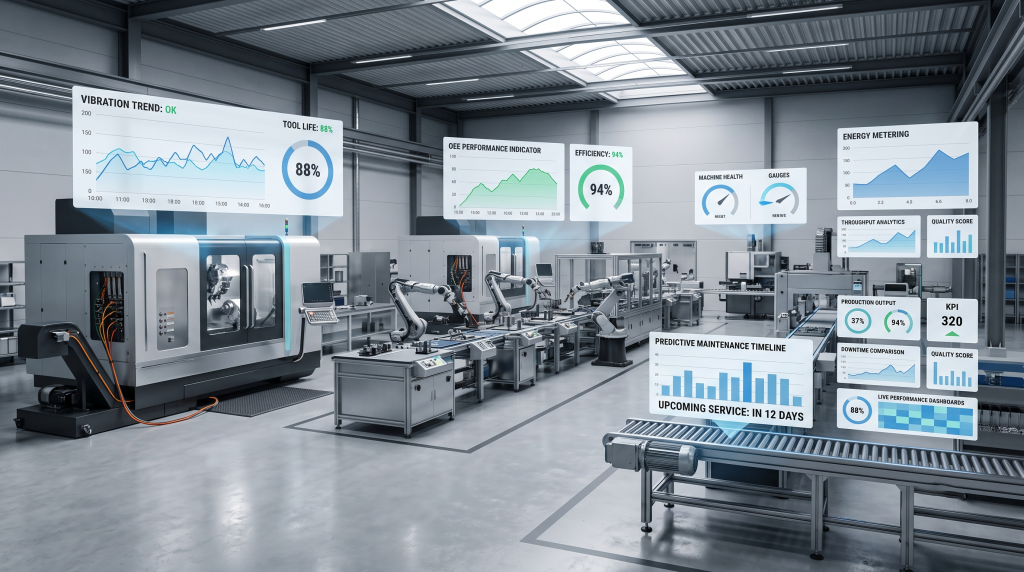
The concept was first introduced in manufacturing and aerospace, where engineers needed a way to simulate asset behavior without disrupting operations. Today, digital twins are used across industries ranging from smart cities and energy to logistics and healthcare.
According to IBM, the digital twin market is expected to grow from USD 24.5 billion in 2025 to USD 259.3 billion by 2032, driven by rising demand for predictive intelligence and operational efficiency.
How Does a Digital Twin Work?
A digital twin system has three core components working together:
1. The Physical Asset
This is the real-world entity being modeled; a machine, a production line, a cold storage warehouse, a fleet of vehicles, or even an entire building. Sensors are attached to this asset to continuously capture data.
2. The Data Layer
IoT sensors collect real-time data on parameters such as temperature, pressure, vibration, speed, energy consumption, or location. This data is transmitted, typically via industrial protocols or cloud connectivity, to the digital model.
3. The Digital Model
The virtual model receives the live data feed and updates continuously to reflect the current state of the physical asset. Engineers and operators can interact with this model to monitor performance, run simulations, identify anomalies, and test changes, all without touching the real asset.
What Can You Do With a Digital Twin?
Digital twins unlock capabilities that traditional monitoring systems simply cannot offer:
- Real-time monitoring: View the live status of assets from any location, with instant visibility into performance and anomalies.
- Predictive maintenance: Detect early signs of equipment degradation before failures occur, reducing unplanned downtime and maintenance costs.
- Simulation and testing: Model the impact of changes, new configurations, or stress conditions in the virtual environment before applying them to the real asset.
- Process optimization: Identify bottlenecks, inefficiencies, and energy waste across entire production or logistics systems.
- Root cause analysis: Replay historical data to understand why a failure occurred and how to prevent recurrence.
Enterprises that deploy digital twins consistently report strong returns. A 2025 Hexagon survey found that 92% of companies using digital twins report returns above 10%, with more than half reporting a return on investment of at least 20%.
Digital Twins in Industrial IoT
The connection between digital twins and Industrial IoT (IIoT) is fundamental. Without IoT sensors providing continuous data, a digital twin would be a static model, useful for design, but not for operations. It is the live data stream from connected devices that transforms a model into a dynamic, intelligent replica.
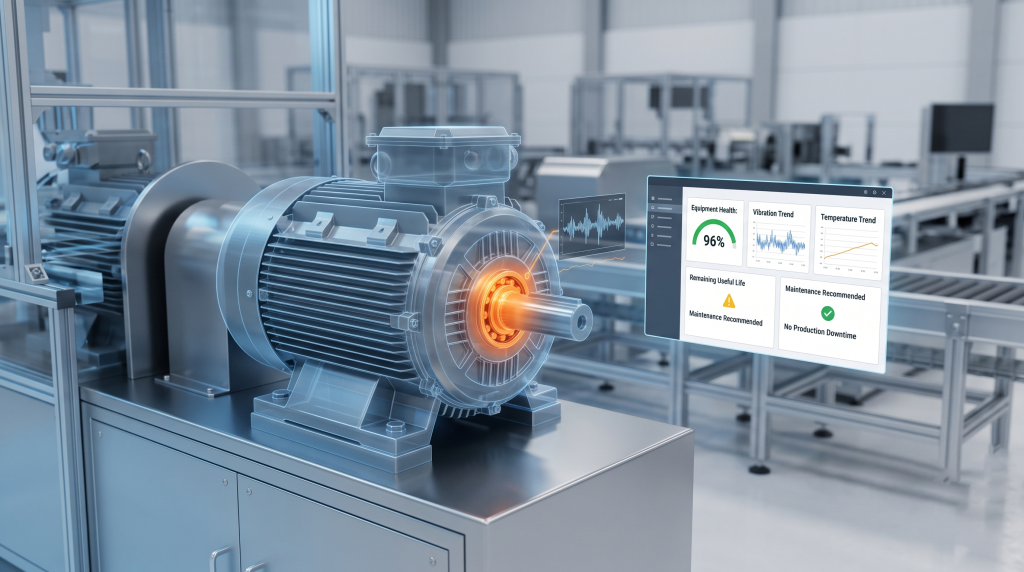
In an IIoT environment, digital twins act as a convergence layer between raw sensor data and higher-level analytics and decision-making. They do not just show what is happening. In fact, they explain why it is happening and help predict what will happen next.
Key industrial applications include:
- Manufacturing — Monitoring production lines for quality deviations, energy inefficiency, and equipment wear.
- Oil and gas — Simulating pipeline conditions and predicting corrosion or pressure failures.
- Energy — Managing wind turbines, solar arrays, or power grid infrastructure in real time.
- Logistics — Tracking assets such as forklifts, containers, or refrigerated vehicles across a supply chain.
- Smart buildings — Optimizing energy consumption, HVAC performance, and occupancy management.
Digital Twins and Industry 4.0
Digital twins are widely recognized as one of the core enabling technologies of Industry 4.0, the fourth industrial revolution characterized by cyber-physical systems, smart automation, and data-driven decision-making.
In a fully connected Industry 4.0 environment, individual digital twins do not operate in isolation. They form networks, communicating with each other, sharing insights, and collectively optimizing an entire ecosystem of assets and processes. This cooperative intelligence is what separates modern digital twin deployments from earlier monitoring systems.
What Should You Look for in a Digital Twin Solution?
For industrial and enterprise teams evaluating digital twin technology, the key selection criteria are:
- Sensor compatibility — Can the platform integrate with your existing IoT hardware and industrial protocols such as Modbus or MQTT?
- Real-time data throughput — Can it handle your data volume without latency that would compromise operational decisions?
- Simulation capability — Does it support scenario modeling, not just live monitoring?
- Scalability — Can it grow from monitoring a single machine to an entire facility or fleet?
- Integration with existing systems — Does it connect to your ERP, SCADA, or cloud infrastructure?
How Elidiso Supports Digital Twin Deployments
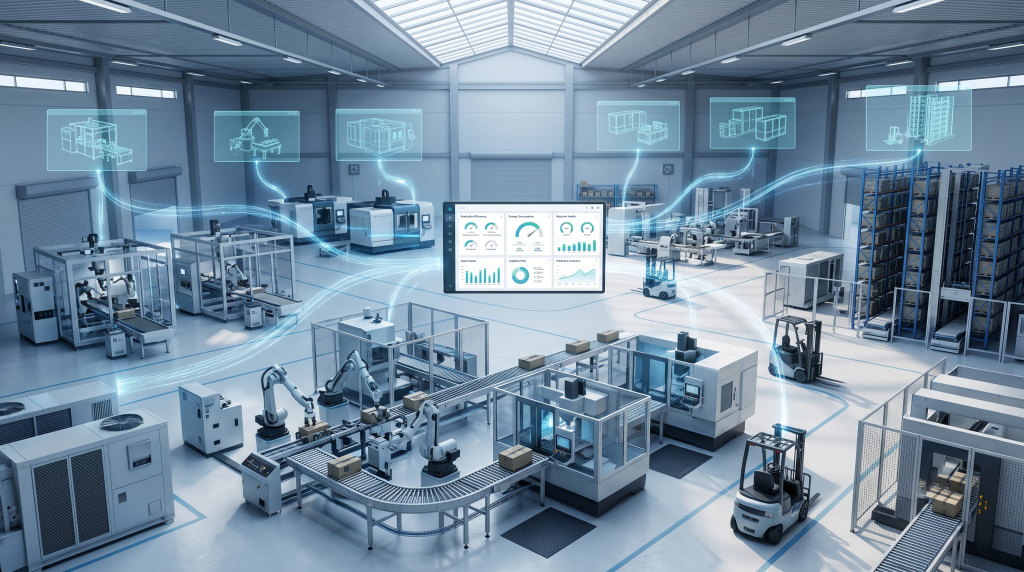
At Elidiso, our IoT environmental monitoring solutions provide the sensor infrastructure and connectivity layer that digital twin platforms depend on. Our industrial-grade sensors capture the real-time data streams, temperature, humidity, pressure, air quality, and more, that feed the virtual models and make them accurate, actionable, and trustworthy.
Whether you are building a digital twin for a single piece of critical equipment or an entire industrial facility, Elidiso’s monitoring hardware and connectivity solutions give you the data foundation you need. Contact our team to discuss how our IoT solutions can support your digital twin strategy.