Energy and Utility Monitoring: Why Operators Can’t Afford Blind Spots Anymore
Energy and utility monitoring exists to catch a specific kind of risk: failures that don’t happen all at once. Power distribution and utility infrastructure rarely fail in a single dramatic event. They fail in small, measurable steps first, a voltage fluctuation lasting a few seconds, a load imbalance that grows slightly worse every week, a piece of equipment running a few degrees warmer than it should. Individually, none of these looks urgent. Together, over weeks or months, they’re often the early signature of a failure that eventually becomes urgent, expensive, and very public.
Energy and utility systems carry a different category of risk than most monitored industries. A factory line going down affects one facility. A substation or distribution fault can affect a neighborhood, a hospital, and a water treatment plant at the same time. For utility operators, the margin for “we’ll catch it next time someone checks” is smaller than almost anywhere else.
What Is Energy and Utility Monitoring?
Energy and utility monitoring is the continuous tracking of power distribution, load conditions, and the physical and environmental status of utility assets, often across multiple sites, using sensors, gateways, and centralized software instead of periodic manual inspection. Unlike a smart meter, which only reports consumption, a full monitoring system tracks the operating conditions around that consumption: voltage and current fluctuations, equipment temperature, environmental conditions at remote sites, and the connectivity status of distributed assets like substations or pump stations.
The Visibility Gap in Utility Infrastructure
Most utility and energy operations already collect some data. Meters log consumption. SCADA systems track core operational parameters. The gap is rarely a total absence of data, it’s usually that the data lives in disconnected systems, gets reviewed on a delay, or only covers part of the operation.
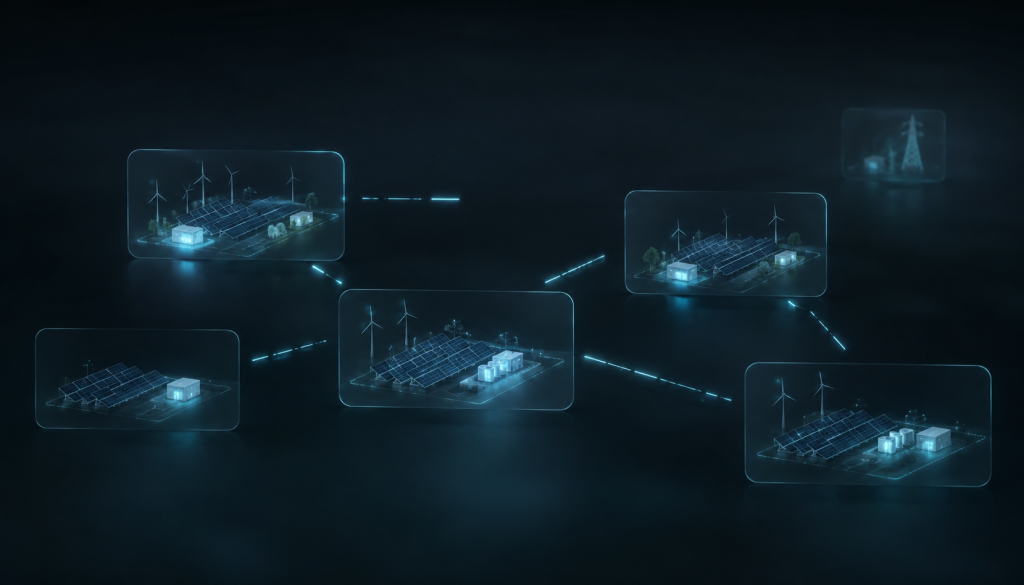
A few patterns show up repeatedly across utility infrastructure monitoring:
- Power distribution and consumption are tracked, but voltage, current, and load fluctuations on individual circuits aren’t monitored closely enough to catch a developing problem before it trips a breaker or damages equipment.
- Remote or unmanned sites, substations, pump stations, distributed generation assets, go unchecked for long stretches between physical visits, leaving the operator dependent on equipment simply not failing in the meantime.
- Utility assets are managed locally, site by site, instead of through one system that gives operations teams a consistent view across the whole network.
None of these gaps come from negligence. They come from infrastructure built and expanded over years, often decades, with monitoring added incrementally rather than designed in from the start.
How Real-Time Energy Monitoring Works
The shift from periodic checks to real-time energy monitoring isn’t really about collecting more data. It’s about collecting the right data constantly enough that a developing problem is visible while it’s still developing, not after it’s already caused an outage.
For energy and utility environments specifically, that means:
Power distribution and load monitoring
Tracking voltage, current, and load conditions continuously, so fluctuations that precede equipment stress or failure are caught early, rather than discovered through a tripped breaker or a damaged transformer.
Remote and distributed asset monitoring.
Substations, pump stations, and generation sites don’t need to depend on scheduled physical visits to report status. Sensors and connected gateways report continuously, even from locations with limited local network infrastructure.
Centralized operational visibility.
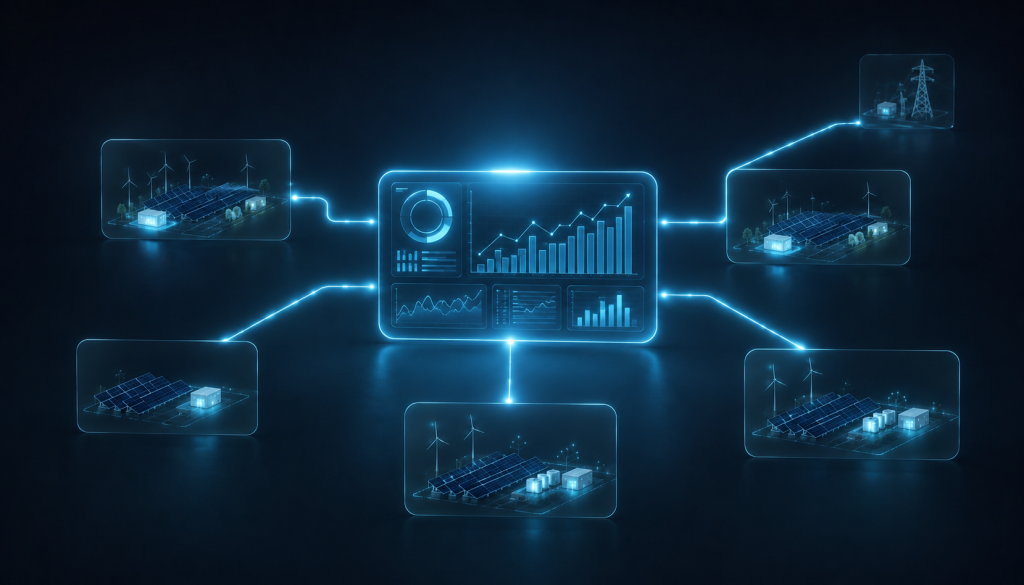
Bringing utility assets across multiple sites into a single monitoring dashboard means an operations team isn’t reconstructing the full picture from separate local systems during an active incident. The picture already exists, and it’s already current.
Threshold-based real-time alerts.
Limits set for each parameter mean that when a reading moves outside an acceptable range, the responsible team is notified immediately, not at the next scheduled inspection.
Elidiso’s Approach to Energy and Utility Monitoring
This is the same underlying architecture Elidiso applies across industrial and environmental monitoring more broadly: sensors collecting environmental and operational data, a gateway connecting devices across distances and protocols (including Modbus RTU and Modbus TCP) without requiring a full infrastructure overhaul, and monitoring software that brings everything into one real-time dashboard, with historical data and alerting built in.
For energy and utility operators, that architecture addresses a specific version of a problem every monitored industry faces, one we covered in more general terms in What Is Environmental Monitoring and Why Businesses Can’t Ignore It in 2026: the risk that matters most is rarely the one you’re already watching closely. It’s the one quietly developing somewhere you’re not.
The Real Question for Utility Operators
The technology to monitor distributed energy infrastructure continuously already exists and is already in use across the industry. The open question for most operators isn’t whether to adopt it, it’s how much of their current infrastructure is still depending on scheduled checks for an outcome that depends on continuous awareness instead.
If a voltage fluctuation started on one of your remote assets right now, how long would it take your team to find out?